
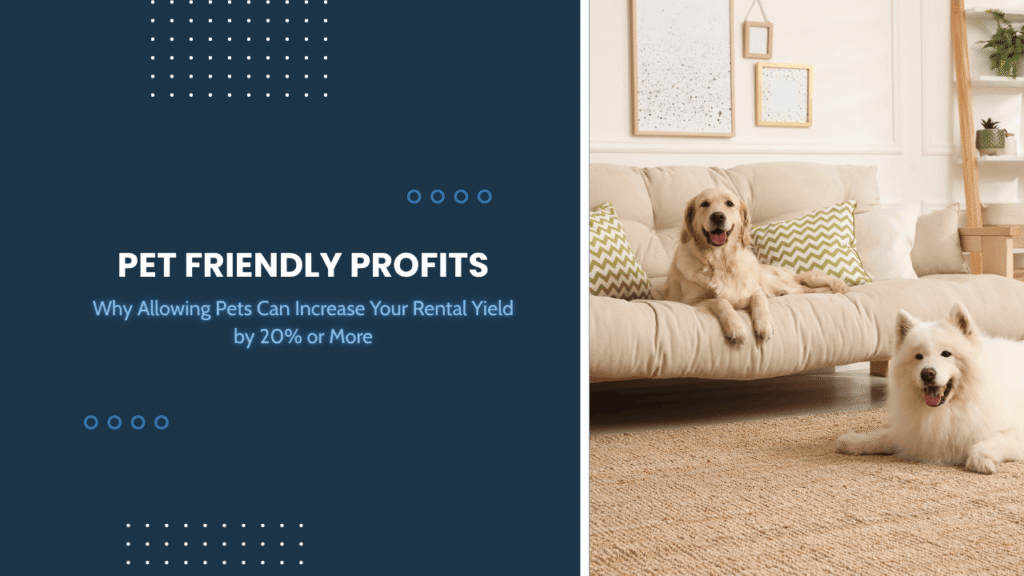
Are you missing out on extra rental earnings because you’re not allowing pets?
We have talked to plenty of landlords who have a simple rule: “No pets.”
The rationale is understandable. In a worst-case scenario, pets can lead to property damage, extra liability, and complex screening and operations. But in today’s evolving rental landscape, especially in high-demand states like Florida, that mindset is increasingly outdated. It’s also becoming more expensive for owners.
Allowing pets is so much more than a tenant-friendly perk. It’s a revenue optimization strategy. When implemented correctly, a pet-friendly policy can increase your rental earnings by up to 20% through higher rents, lower vacancy, and stronger tenant retention.
This is not just a factor for long-term rental owners to consider. If you’re renting out a vacation home in Southwest Florida, your guests may be traveling with their furry family members. When you create a welcoming space for them, you attract more business and you earn more money.
Let’s break down why pets are more important than ever.
Our Summary:
|
Demand Shifts: Tenants with Pets Are Now in the Majority
The most important macro trend is straightforward: most renters now have pets.
- Roughly 6 in 10 renters own a pet, and in markets like ours, the percentage is probably even higher.
- Across all U.S. households, about two-thirds have at least one pet
- Nearly half of renters skip listings that don’t allow pets
This creates a scenario wherein demand for pet-friendly properties has grown. Many landlords still restrict pets, which means pet-friendly properties operate in a less competitive niche and are quicker to attract tenants. By not allowing pets, you’re seriously thinning out the pool of tenants who will be willing to rent your property.
Faster Leasing = Immediate ROI Gains
One of the most measurable financial benefits of allowing pets is reduced vacancy time.
Pet-friendly listings rent faster on average. They also generate more engagement (views, saves, shares) when we talk about listings and the attention your rental can get on the most popular rental platforms.
In Florida’s competitive rental cycles, especially during seasonal fluctuations, this matters.
The Rent Premium: Pet-Friendly Units Earn More
Because pet-friendly inventory is limited, renters are often willing to pay a premium when they find a rental home that’s going to accept their pets. Many landlords see 10–20% higher effective revenue when combining rent premiums, pet fees, and occupancy gains
Where does the extra income come from? Here’s how you can track it:
- Higher base rent (tenants will expect higher rents for homes with outstanding amenities, including pet-friendly policies)
- Monthly pet rent (this is commonly charged at $25–$100 as a typical range)
- Pet deposits (refundable) or non-refundable pet fees
- Higher occupancy rates
In Florida, where many renters relocate with pets (especially retirees and remote workers), these premiums are particularly durable.
We like to recommend the non-refundable pet fee over a refundable pet deposit. That way, you don’t have to worry about returning any money that isn’t used to clean or repair pet damage.
Tenant Retention Adds to Better Profitability
Turnover is one of the biggest hidden costs in rental ownership. Between cleaning, repairs, leasing fees, and vacancy, a single turnover can cost you thousands of dollars.
Pet-friendly policies directly improve retention:
- Pet-friendly housing increases tenant satisfaction and stability
- Tenants with pets are less likely to move, because pet-friendly options are limited and they don’t want to pay a new pet fee every time they move.
- There’s also the stress of moving on their animals, which conscientious pet owners want to avoid.
So, they stay longer.
Even a modest retention increase from 1 year to 2 years average tenancy can save you money and significantly boost net earnings.
Expanding Your Applicant Pool (Without Lowering Standards)
When you allow pets, you don’t just get more applicants. We’ve found you get more qualified applicants.
A larger applicant pool allows you to be more selective, maintain stricter screening criteria, and avoid lowering rent just to fill the rental property and attract a qualified tenant.
Tenants who take care of their pets are going to take care of the property where they live.
The Real Yield Math: How Do We Predict a +20% Increase in Earnings?
Let’s model a realistic Southwest Florida scenario.
Without Pets:
- Rent: $2,000/month
- Vacancy: 30 days/year
- Annual income: $22,000
With Pets:
- Rent: $2,100 (+5%)
- Pet rent: $50/month = $600/year
- Vacancy reduced by 8 days ($533 saved)
- Better retention reduces turnover costs ($1,000 saved)
New Annual Income:
- Base rent: $25,200
- Pet rent: $600
- Vacancy savings: +$533
- Retention savings: +$1,000
Total: $27,333
That’s a 24% increase in effective earnings.
Even more conservative assumptions routinely land in the 10–20% uplift range.
Short-Term Rentals and Pet-Friendly Policies
For short-term and vacation rental owners, adopting a pet-friendly policy can unlock a powerful competitive advantage, especially in destination markets like Florida. Travelers increasingly view pets as part of the family, and many actively filter listings based on whether animals are allowed.
By simply permitting pets, you immediately access a larger, underserved segment of the market.
- One of the most direct benefits is increased booking volume. Pet-friendly listings tend to receive more visibility and engagement on major platforms, which can translate into higher occupancy rates. In peak travel seasons, this can mean the difference between partial and near-full calendar utilization.
- Additionally, pet-friendly properties often justify higher nightly rates. Guests traveling with pets are typically willing to pay a premium for convenience, especially when alternatives are limited. When combined with pet fees, this can significantly boost per-stay revenue.
- Another overlooked advantage is longer average stays. Guests with pets tend to favor fewer moves and more stable accommodations, leading to extended bookings and reduced turnover costs such as cleaning and re-listing.
Finally, offering pet-friendly amenities, such as fenced yards or easy-clean flooring, can enhance reviews and repeat bookings. In a crowded short-term rental market, these small differentiators can materially improve both profitability and long-term asset performance.
Addressing the Biggest Concern: Property Damage
We understand the owners who are concerned about property damage and extra costs that may be associated with cleaning up or repairing a home after a tenant with pets has been in residence. This, we know, is the main reason landlords hesitate.
However, experience across the industry shows two important things:
- Most pet-related damage is minor and manageable (cleaning, wear-and-tear)
- Proper fee structures and policies more than offset costs
Here are the risk mitigation strategies we recommend:
- Pet screening. Be specific with restrictions on breed, size, vaccination records, and vet references.
- Non-refundable pet fee + monthly pet rent. Charge a per-pet fee and rent.
- Clear lease clauses. Let your tenants know what your expectations are around noise, waste, and supervision. For example, in a multifamily complex, you can require that dogs are leashed.
- Flooring and finishes designed for durability.
Handled correctly, pets can become more predictable.
Florida-Specific Considerations
Florida presents unique advantages for pet-friendly landlords:
- Lifestyle Alignment. Outdoor living, beaches, and parks make Florida inherently pet-friendly. Renters expect accommodation for pets.
- Migration Trends. Many inbound residents (especially from northern states) relocate with pets, increasing demand pressure.
- Seasonal Leasing Cycles. Faster leasing (pet-friendly advantage) helps offset seasonal slowdowns.
- Competitive Edge. In many Florida submarkets throughout Southwest Florida, pet-friendly inventory still lags demand, creating pricing power.
You Need a Profitable Pet Policy
A successful pet-friendly strategy isn’t to allow everything. Create a policy that’s structured and enforceable. Limit the number of pets you’ll allow and implement weight or size guidelines. Ask tenants to sign a written pet agreement which outlines the pet rent and the pet fees.
Don’t forget to market your listing explicitly as pet-friendly to get the attention of prospective tenants.
FAQs
- How much should I charge for pet rent?
Most landlords charge $25–$75 per month per pet, depending on the property and market.
- Should I allow all pets or restrict them?
It’s best to allow pets with reasonable restrictions (size, number, behavior history).
- What about insurance and liability?
Check your landlord insurance policy. Some have breed restrictions or liability adjustments.
- Do pet-friendly units really rent faster?
Yes. On average, they lease about a week faster than non-pet-friendly units.
- What’s the biggest mistake landlords make with pets?
Allowing pets without a structured policy or pricing model.
 Something essential to remember is that service animals and companion animals such as emotional support animals are not pets and cannot be treated as pets. Don’t make this mistake. The law sees them as accommodations.
If you’d like to talk about pet policies or anything pertaining to the management of your investment property, please contact us at Realty Group of Southwest Florida. We manage short-term and long-term rental properties throughout Estero, Naples, Bonita Springs, Fort Myers, Cape Coral, and the surrounding areas.